


How Does a Notebook Making Machine Work? Stage by Stage
A stage-by-stage look at the HL-1100HB web-fed flexo printing and cold glue binding line, from roll paper to finished soft-cover notebooks.
A web-fed notebook making machine turns roll paper into finished soft-cover notebooks by printing and binding the paper in one inline pass. For factory owners asking “how does a notebook making machine work,” understanding the process helps connect machine specifications to production needs. Buyers can then check whether a line suits their stock and required binding method.
The Heli Machinery HL-1100HB combines flexographic printing with cold glue binding. Paper moves between linked stations without manual transfers between separate machines.
Automatic operation still requires checks along the line. Poor web guiding can cause print registration drift, while an inadequate glue film can leave pages pulling out of the spine. Factory owners and commercial printing managers need to understand where those defects begin before comparing equipment. Following the production stages also reveals the limits of an exercise book making machine, including jobs that need a different binding process.
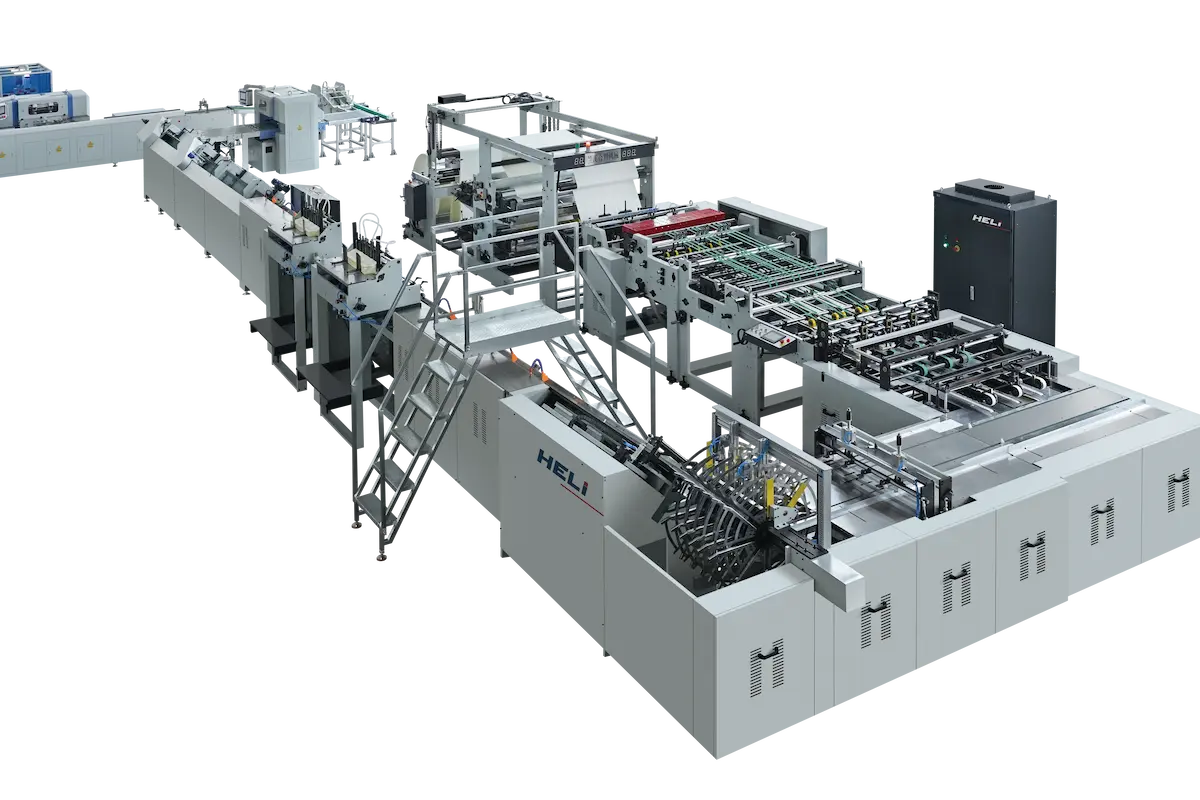
How does a notebook making machine work in one pass?
The HL-1100HB moves roll paper through linked printing and binding stations to produce finished soft-cover notebooks. The web is printed, creased, slit and folded before cutting and page counting. Gathered sections are squared and flipped for cold glue application. Covers and spine strips are applied before hot-air drying and final finishing.
| Stage | What happens |
|---|---|
| 1. Web feeding and guiding | The roll feeds in and the web is held on centre |
| 2. Flexographic printing | Double-sided two-color water-based printing |
| 3. Creasing, slitting and folding | The web is creased, slit into strips and folded |
| 4. Cutting and page counting | Strips are cut to sheets and counted into sections |
| 5. Jogging and flipping | Sections are jogged square and flipped |
| 6. Cold glue spine gluing | Cold glue is applied to both sides of the spine |
| 7. Cover and spine strip feeding | Cover, back cover and spine strip are fed and applied |
| 8. Drying, splitting, trimming and corner rounding | Books are dried, split, trimmed and corner-rounded |

How does a notebook making machine work at each production stage?
Each production stage prepares the paper for the next operation, while alignment and binding checks help operators trace defects to their source.
Web feeding and guiding
The feeding station draws paper from a roll, and the guiding system keeps the moving web centred. The HL-1100HB accepts roll paper rather than pre-cut sheets.
Poor web guiding can cause print registration drift. Ask the supplier to run your intended stock and check whether printing stays aligned.

Flexographic printing
The flexographic printing station prints both sides of the paper web using two-color water-based printing. Buyers comparing a flexo notebook printing machine should inspect print alignment on their intended stock.
Print registration drift can result from poor web guiding or plate wear. Ask how operators identify the cause before adjusting the guiding system or replacing a plate.
Creasing, slitting and folding
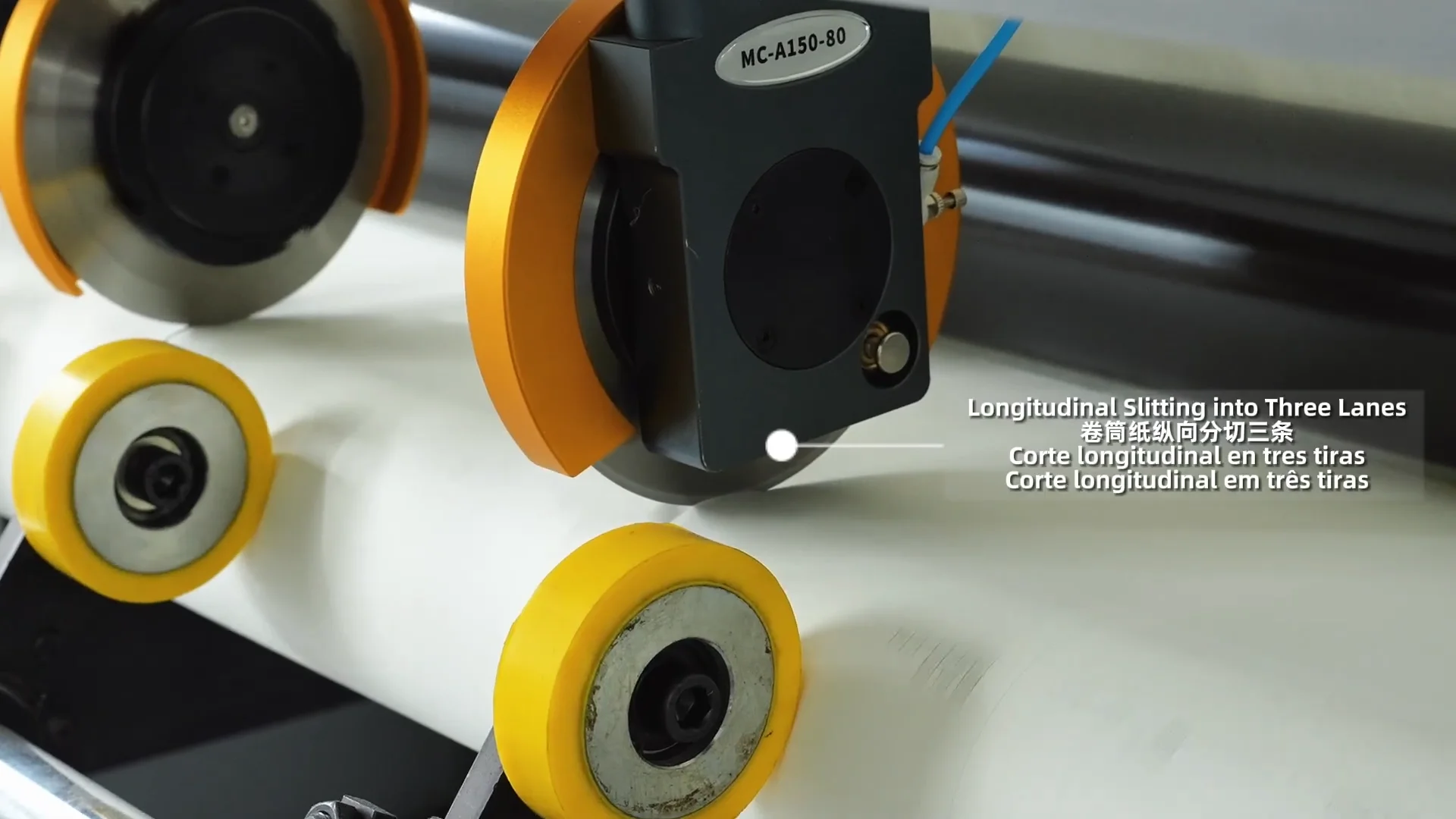
The line creases the printed web, slits the paper into strips and folds the strips for cutting. Paper grain should run parallel to the notebook spine. Cross-grain stock can become wavy and fold poorly, and the line cannot correct the grain direction.
Slitting or folding out of square can leave finished notebooks skewed. Inspect folded samples and ask how operators check station alignment.
Cutting and page counting
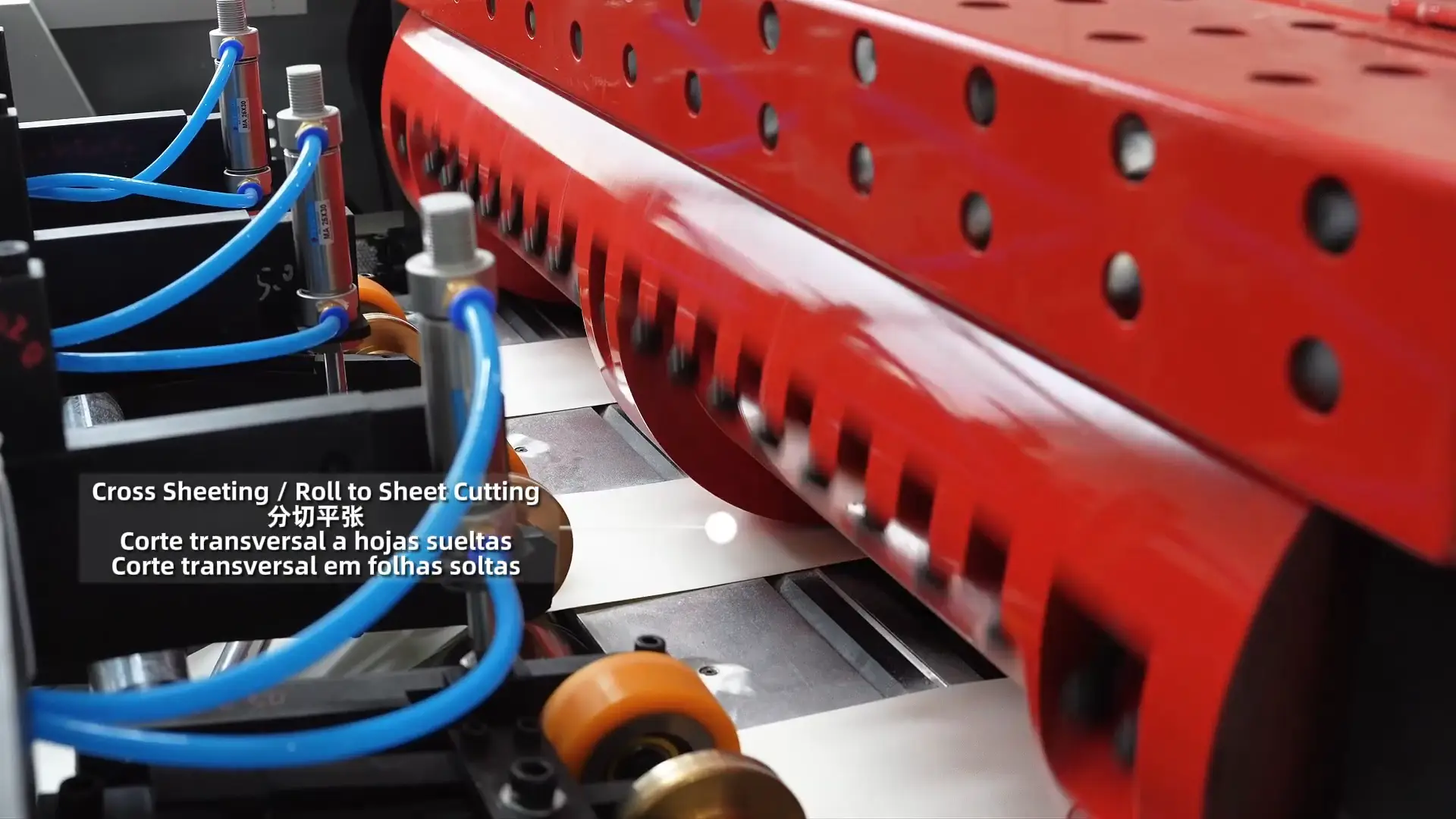
The cutting station cuts the strips into sheets, while the counting station groups the sheets into sections for binding.
The HL-1100HB prints and cuts at 300 m/min web speed on 45–100 g/m² paper. That figure measures paper travel rather than finished notebooks per hour. More sheets per notebook reduce the finished-book count, so buyers should ask the supplier to confirm output for their intended notebook size and sheet count before planning production capacity.
Jogging and flipping
The jogging station squares the gathered sections, and the flipping station turns them for the next operation. The aligned sections then move towards cold glue spine binding.
Inspect gathered sections during a trial run. Skewed sections call for checks at the slitting and folding stations before binding begins.
Cold glue spine gluing
The binding station applies water-based cold glue to the spine back and both sides of the gathered book block. The HL-1100HB is a cold glue binding machine. The line does not use thread sewing or hot-melt adhesive.
A thin glue film can cause pages to pull out of the spine. Buyers should ask how operators check glue application and examine bound samples made with their intended paper. Paper suitability matters because different stocks can absorb cold glue differently.

Cover and spine strip feeding
The feeding station applies the cover, back cover and reinforcing spine strip to the glued book block. The spine strip is glued over the spine rather than sewn into the binding.
A cover feeder that is out of registration can leave covers misaligned. Inspect cover positioning on finished samples and ask how operators re-register the feeder.

Drying, splitting, trimming and corner rounding
The line dries the glued books under hot air before splitting, trimming and corner rounding. Low dryer temperature can cause pages to pull out of the spine, so binding problems require checks of both drying temperature and glue film.
Dull trimming knives leave ragged edges on finished notebooks. Inspect dried samples for clean cuts and check knife condition. Hot-air drying sets the cold glue. The adhesive is not hot melt.

How does cold glue binding differ from thread sewing and hot melt?
Cold glue binding joins the book block with water-based adhesive, thread sewing joins sections with thread, and hot-melt binding uses adhesive applied molten. Spine preparation serves a similar purpose, but the joining method and drying or curing step differ.
For buyers comparing cold glue binding vs thread sewing, the required construction determines the machine class. The HL-1100HB uses cold glue followed by hot-air drying. Products requiring thread sewing need a different binding process.
How does a notebook making machine work reliably?
Knife condition and glue application affect finished-book quality, while web guiding and cover feeding affect alignment. Ragged edges call for trimming-knife checks. Pages pulling out require checks of glue film and hot-air dryer temperature.
The HL-1100HB uses Mitsubishi PLC with Fieldbus control, Siemens/ABB electrical controls, NSK/SKF bearings and Swiss HABASIT belts. Buyers should also check replacement arrangements for slitting and trimming knives, cold glue application parts and cover feeder suckers.
Waiting for a replacement part can extend downtime. Ask each supplier in writing for the lead time on a wear part expected to need annual replacement before comparing quotes.
What do speed, staffing and paper specifications mean in practice?
Web speed describes paper travel, staffing describes operator requirements, and stock specifications determine which jobs the line can run. The HL-1100HB prints and cuts at 300 m/min web speed on 45–100 g/m² paper within a 600–1100 mm web-width range. Cover stock has a separate range of 70–300 g/m².
The fully automatic inline line needs about 3 operators during production: 1 at delivery and stacking, 1 checking front feeding, and 1 patrolling the line. The requirement remains about 3 operators as production volume rises.
Recycled paper has shorter, more variable fibres and can absorb cold glue differently. Test the intended stock before judging production suitability.
Which jobs need a different production process?
Jobs using pre-cut sheets or requiring thread sewing need different equipment. The HL-1100HB is a web fed notebook binding line that uses cold glue. Web stock outside 600–1100 mm width or 45–100 g/m² paper weight cannot run, regardless of headline speed.
A thin, low-page-count stitched booklet may suit a saddle stitcher better. For hardcover production, the line produces the book block only. Finishing the hardcover requires downstream equipment, including a headband machine, a ribbon machine and a casing-in machine.
Frequently asked questions
Finished output depends on notebook specifications, while paper input and binding construction determine whether the line suits the job.
How many notebooks per hour can a notebook making machine produce?
How many operators does a notebook making machine need?
What is the difference between cold glue binding and thread sewing?
What is the difference between a web-fed and a sheet-fed binding machine?
How is the spine of a cold-glue-bound notebook formed?
Where Heli Machinery lines fit
Heli Machinery builds the HL-1100HB web-fed flexographic printing and cold glue notebook binding line. It takes one paper roll and turns it into finished soft-cover notebooks in a single inline pass: double-sided two-color printing, creasing, slitting, folding, page counting, cold glue spine binding, cover and spine strip feeding, drying, three-knife trimming and corner rounding. It runs a 600–1100 mm web and prints and cuts at 300 m/min web speed on 45–100 g/m² paper.
It is not the right machine for everyone. It is web-fed, so it does not take pre-cut sheets; it binds with cold glue, so it does not thread-sew; and it does not make a finished hardcover book (it produces the book block only). A producer whose product is a thin stitched booklet needs a stitcher, not a binding line, and we would tell them so.