

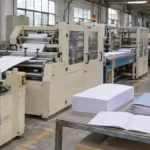
Exercise Book Making Machine Comparison: Semi-Automatic vs. Fully Automatic
Compare your options by order mix, investment and production needs.
This exercise book making machine comparison helps you assess whether semi-automatic equipment or a fully automatic line suits your factory and orders. A semi-automatic setup allows you to invest in individual operations and schedule jobs across separate machines. A fully automatic line connects more stages, reducing the handling needed between them.
Your product range, order sizes and existing equipment will help determine which approach makes sense. The aim is to match the investment to the work you need to produce.
1. Semi-Automatic Equipment: Flexible Production with a Smaller Initial Investment
A semi-automatic setup divides production among separate machines for operations such as printing, folding, binding and trimming. Operators feed materials and move work between stages. This can be a practical choice for smaller factories or businesses building capacity gradually, particularly where labor is readily available at a competitive cost.
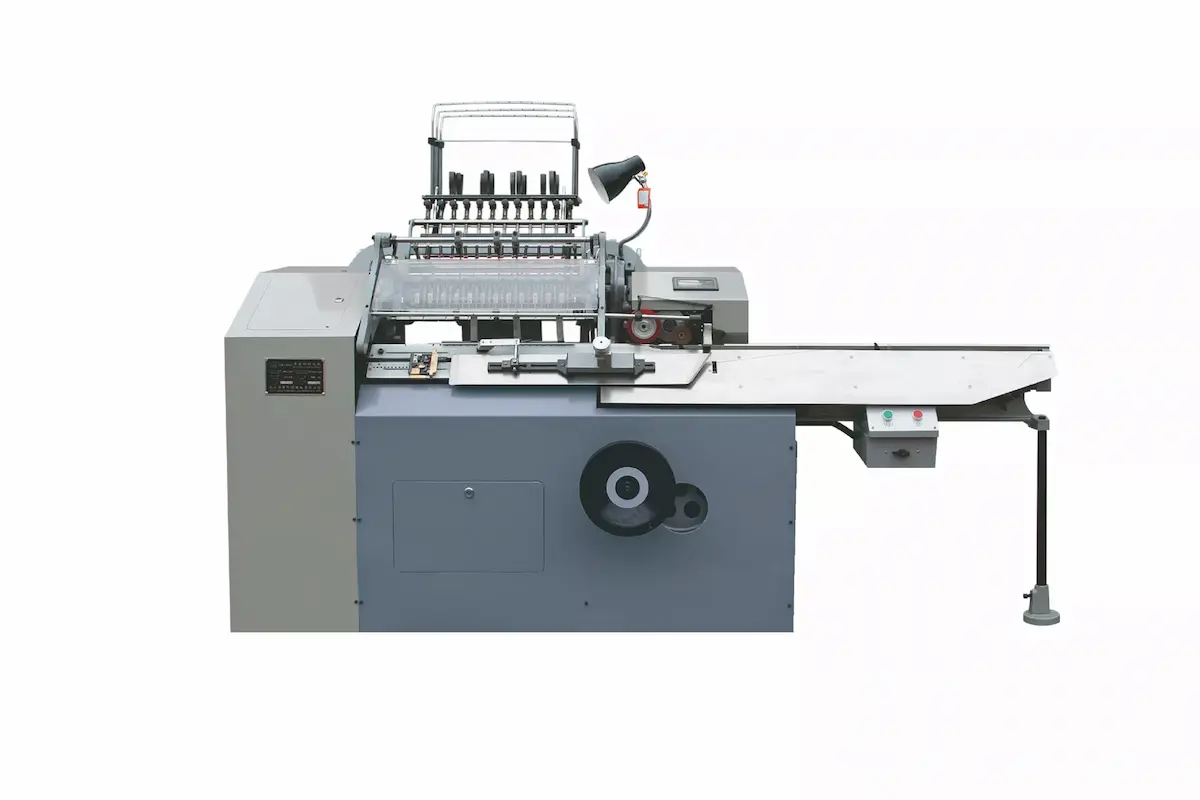
Keep the initial investment manageable
Adding individual machines can require less upfront capital than installing a complete automatic line, especially when existing equipment can be retained. Factories can spread purchases across stages as demand grows, leaving more working capital for paper, covers and daily operations.
Adapt production to varied orders
Independent machines give factories more freedom to schedule different products and smaller batches. Each station can be adjusted for the job it handles, which is useful when orders follow different production routes. Changeover time depends on the specifications being changed and the equipment involved.
Balance equipment costs with labor needs
This approach relies more on people for feeding, transfers and batch checks. Where local staffing costs are favorable, that balance may suit the factory's budget. As volumes grow, handling time and coordination between machines become more important to overall output.
2. Fully Automatic Lines: Integrated Production for Higher Volumes
A fully automatic exercise book line brings multiple stages together. Depending on the product and configuration, it can take paper from web printing and sheet preparation through binding, folding, trimming and collection. The binding route may include wire stitching, sewing with spine taping, or cold-glue binding, as required by the book construction.
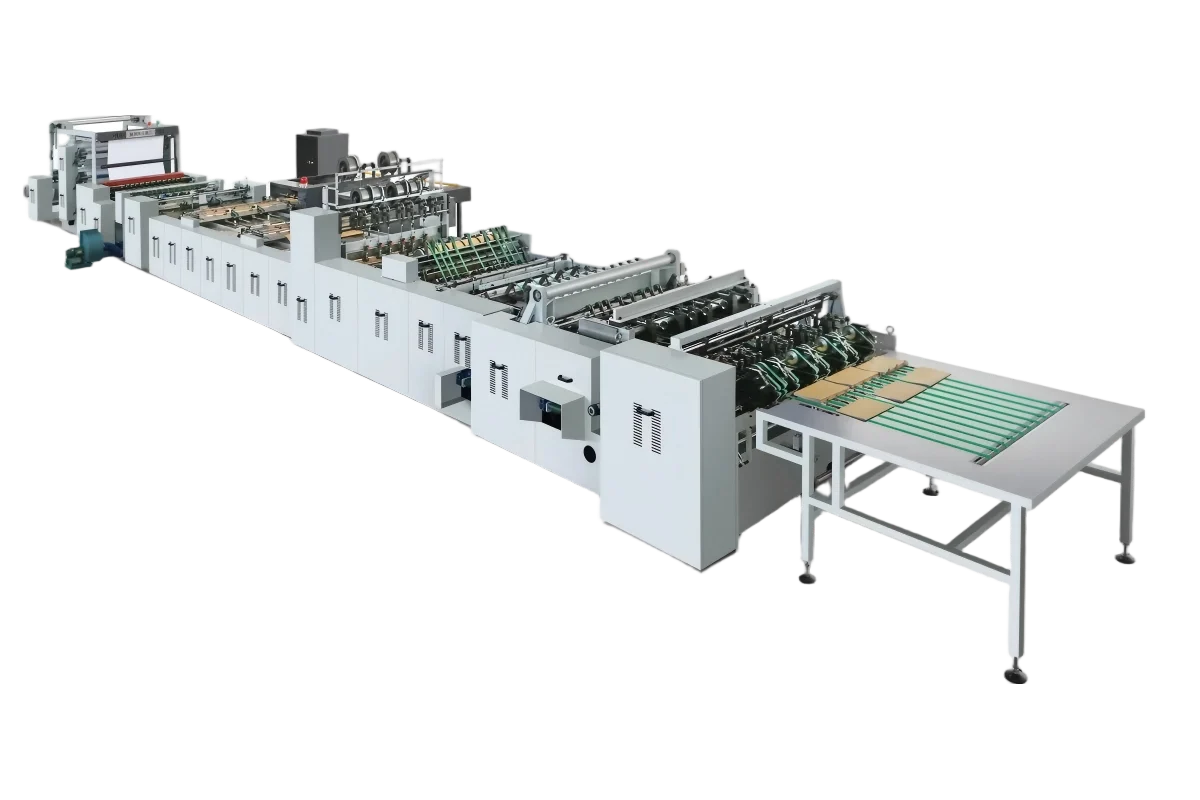
Sustain high-volume production
Connecting operations reduces repeated stops for collecting and refeeding partly finished work. For large orders with standardized specifications, this supports longer production runs and higher output. Actual finished capacity depends on the book format, sheet count and speed of the limiting section.
Reduce staffing and manual handling
Automatic handling reduces the need to move material between connected stages. For suitable products and line configurations, staffing can drop from more than 10 people across separate machines to 2–4 line operators, substantially reducing direct labor costs. Their work centers on material supply, line monitoring and quality checks. These figures refer to line operation; separately managed tasks such as cover printing and packing require their own staffing.
Support consistent finished quality
Coordinated feeding, counting and positioning help maintain consistent assembly as books pass through the line. Accurate setup and routine maintenance remain essential to keeping ruling, binding and trimming within specification. Reliable components and accessible technical support also help sustain continuous operation.
3. Exercise Book Making Machine Comparison: Semi-Automatic vs. Fully Automatic
| Factor | Semi-automatic setup (e.g. HL-430A, HL-460D) | Fully automatic line (e.g. HL-1080GD, HL-1080FX) |
|---|---|---|
| Best fit | Startups, small to medium runs, and varied custom exercise books | Large factories and high-volume orders for standard school exercise books |
| Production volume | Small to medium | Large-scale production |
| Degree of automation | Partial, with manual feeding and handling | Fully automatic, from paper roll to finished book |
| In-line printing | Separate operation | Integrated |
| Production speed | Moderate | High |
| Staffing needs | More operators | Fewer operators |
| Upfront investment | Lower | Higher |
The table compares a typical setup using separate machines with a web-fed automatic line. Printing integration, speed, staffing and investment depend on the selected configuration. The linked models illustrate each category and use different binding methods; they are not direct alternatives.
4. Match the Setup to Your Orders
Start with the books you need to produce. Finished size, paper weight, sheet count, cover material and binding method define the operations your setup must handle. Assess these specifications alongside order volumes and existing equipment when choosing a single-machine upgrade or an integrated line.

Compare the full cost
Include installation, utilities, training and supporting equipment alongside the purchase price. Then compare labor, consumables, maintenance and setup waste using the same product specifications. Base savings on realistic order volumes, allowing for seasonal demand and working capital for materials.
Test with representative jobs
Share your specifications, typical orders and output targets with the supplier. Where possible, trial your materials and include a job change. Compare saleable output, quality, setup waste and staffing over an agreed period to see how the equipment would perform in your factory.
Plan your next step with Heli Machinery
At Heli Machinery, our commitment goes beyond selling machines. We focus on your actual production needs and how we can deliver greater value to your business. Our mission is to help you meet today's requirements while planning for your next stage of growth. Through equipment selection and customized modifications, we help match the setup to your products, budget and workflow.
Our integrated exercise book production lines are designed for high-speed, high-volume production. Key components from established Japanese and German brands support stable, efficient operation, while an emphasis on reliability helps minimize unplanned downtime. We focus on turning those capabilities into lasting value for your business.
Frequently Asked Questions
Is a semi-automatic setup suitable for starting an exercise book business?
Yes. A semi-automatic setup can be a practical starting point for businesses with limited budgets or smaller orders. It allows you to invest in individual operations and expand as demand grows. Consider local labor costs, expected output and the equipment needed to complete the production process.
Can I keep my existing machines when upgrading to an automatic line?
Often, yes. Existing machines may remain useful for shorter runs, specialty products or operations outside the new line. Review their capabilities and condition with your supplier to decide which equipment to retain and whether any connections or modifications are feasible.
Can exercise book equipment be customized for my products?
Heli Machinery can discuss customized configurations and modifications based on your book size, materials, binding method and production requirements. Sharing samples, target output and details of your existing workflow helps us assess the options for your application.