

Saddle Stitching vs Thread Sewing for Exercise Books
How binding structure, spine finish and production requirements influence your equipment choice.
Two exercise books can have the same size, ruling and cover design yet use different binding methods. Open each book to its center spread and the difference becomes clear. One has wire staples along the fold. The other has a row of thread stitches. On a spine-taped book, tape covers the outside of the spine.
For manufacturers considering saddle stitching vs thread sewing, the choice affects the book’s appearance, binding materials and finishing process. Saddle stitching is often an economical option for everyday school exercise books. Thread sewing can provide a durable binding for repeated use, while spine tape gives the finished book a neat, coordinated appearance.
Understanding how each construction works makes it easier to match the finished product to a suitable exercise book production line.
| Comparison | Saddle stitching | Thread sewing |
|---|---|---|
| Binding materials | Metal wire | Sewing thread, plus spine tape for a taped finish |
| Binding method | Wire staples through the center fold | Thread stitches along the intended fold line |
| Production cost | Generally lower for standard exercise books | Often higher, depending on sewing and taping requirements |
| Durability | Suitable for everyday school exercise books | Can suit repeated handling. Assess the finished binding on samples. |
| Visible finish | Wire staples visible inside the center fold | Thread stitches, with the outside of the spine covered where tape is applied |
| Typical applications | School exercise books and thin notebooks | Composition notebooks and exercise books specified with sewn binding |
Cost and durability are general comparisons. Actual results depend on the paper, page count, binding quality and production configuration.
1. Saddle stitching for everyday exercise books
Saddle stitching secures the cover and inner sheets with wire staples along the book’s center fold. The stitching head forms each staple from wire and drives it through the paper. The staple legs are then clinched, or bent inward, against the innermost sheet. On an integrated exercise book line, stitching can take place along the intended fold line before the assembled sheets are folded.

This construction is widely used for school exercise books and thin notebooks. Its main benefits include economical production, straightforward assembly and a compact finished book.
Benefits of saddle stitching
- Economical binding. Saddle stitching is a cost-effective option for many standard school exercise book orders.
- Straightforward production. Wire stitching fits into a continuous printing, folding and trimming workflow, supporting repeat orders with consistent product specifications.
- A compact format. The folded spine keeps slim exercise books easy to handle, stack and carry in a school bag.
The finished book’s thickness matters. When a stack of sheets is folded, the inner sheets extend beyond the outer sheets at the edge opposite the spine. This effect is known as creep and becomes more pronounced as the stack gets thicker. Paper thickness, trimming allowance and the placement of printed margin lines therefore need to be considered together. Using thicker paper can change the result even when the page count stays the same.
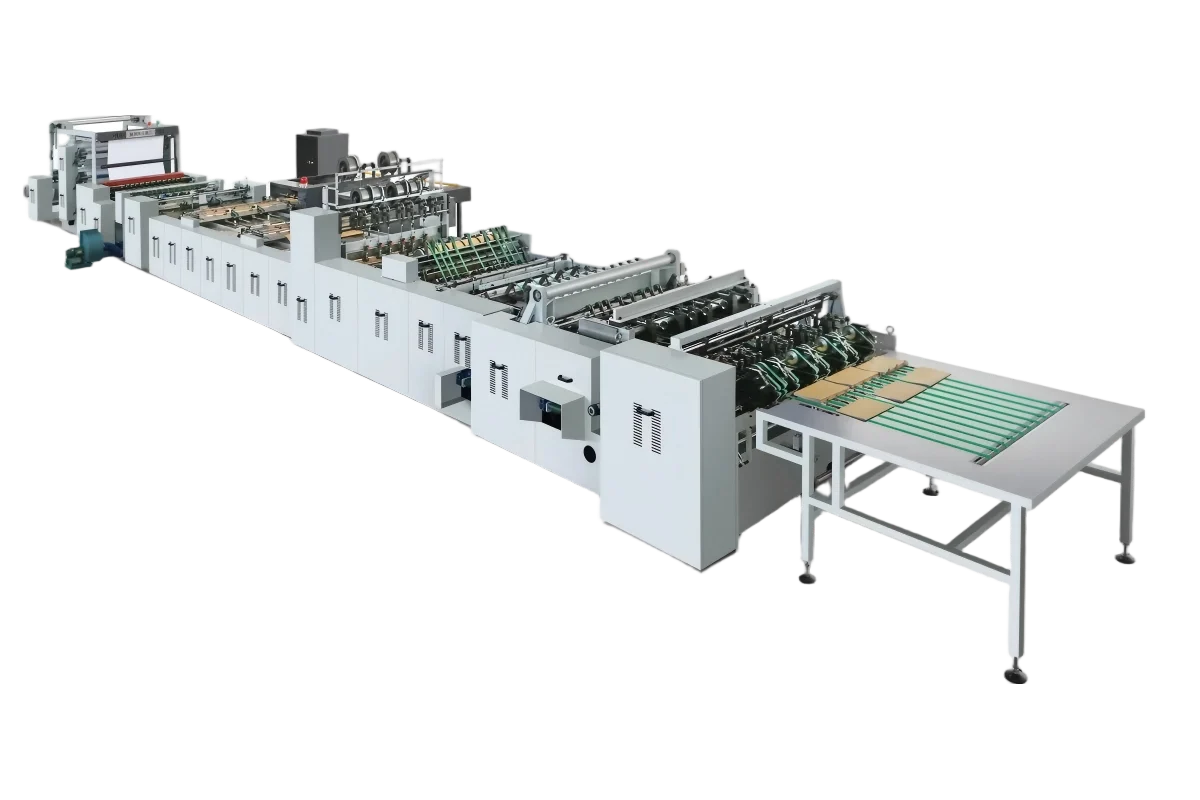
Heli’s HL-1080GD saddle stitching notebook production line combines web-fed flexo printing with sheet counting, cover feeding, wire stitching, folding, spine pressing and trimming. Its Hohner stitching heads form the wire stitches used to secure the exercise books.
2. Thread sewing and the spine-taped finish
This section focuses on the exercise book sewing method used on Heli’s HL-1080FX line. Thread secures the assembled cover and inner sheets along the intended fold line. Spine tape is then applied over the external stitching before the stack is folded. The tape covers and protects the stitching, giving the spine a neat finish. In traditional signature sewing, multiple folded sections are joined with thread to form a book block.


Thread sewing with spine tape is worth considering for composition notebooks and exercise book ranges that call for a durable sewn construction and a coordinated spine finish.
Benefits of thread sewing with spine tape
- Durability for everyday use. A row of stitches holds the sheets together along the fold, helping the book withstand repeated page turning. Binding strength depends on the paper, thread and sewing settings.
- A neat, protected spine. Spine tape covers the external stitching and gives the book a continuous finished surface.
- More design options. Tape in a contrasting color can complement a patterned cover, while coordinated tape colors can give a notebook range a consistent appearance.
The sewing setup needs to suit the paper. During a production trial, check that the stitches hold the sheets securely and that the spine tape is aligned and adheres properly.
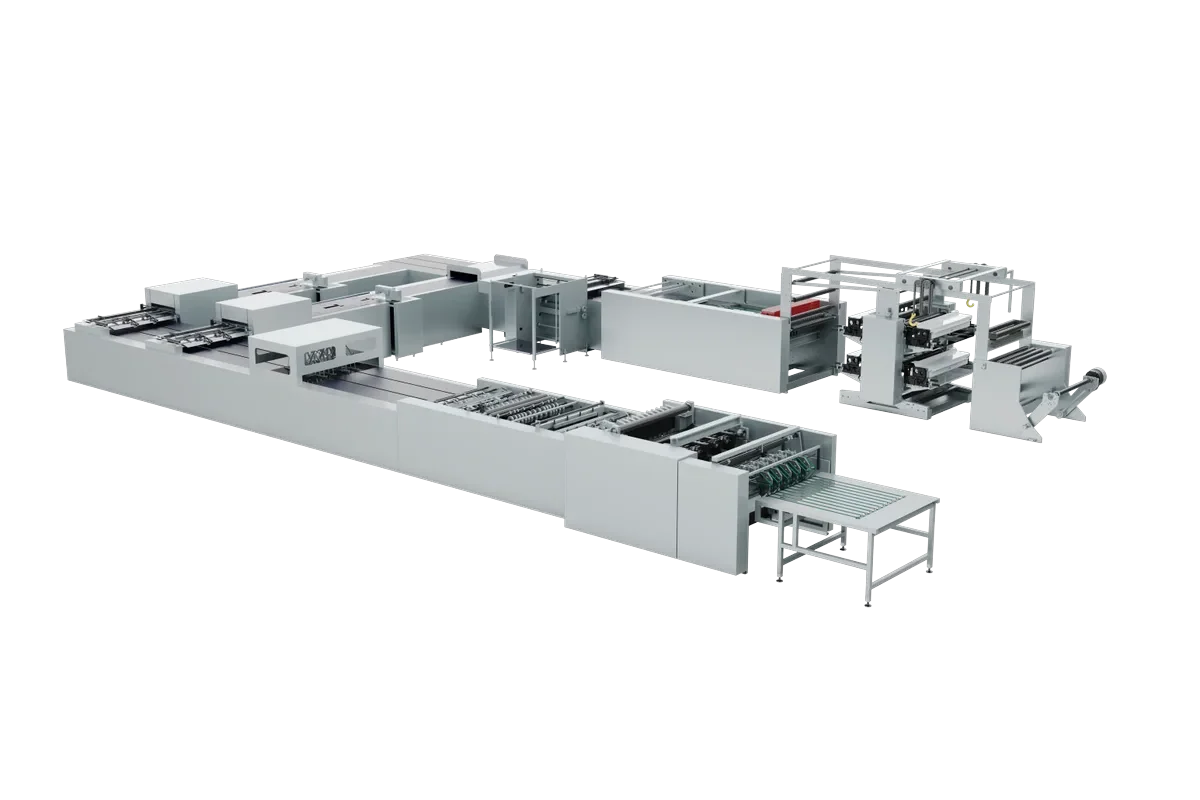
Heli’s HL-1080FX sewn-and-spine-taped notebook production line combines web-fed flexo printing with sheeting, sheet counting, cover feeding, sewing, spine taping, folding and trimming. The line uses Seiko sewing machines.
Providing a finished book sample helps the supplier confirm the sewing and spine finishing required for your order.
3. Saddle Stitching vs Thread Sewing for Your Production Line
Which Binding Method Is Right for Your Production?
Start with your main product specifications, order mix and expected output. For standard school exercise books with a tight cost target, saddle stitching is often a practical starting point. When a customer specifically requires a sewn construction, consider thread sewing. If a coordinated spine finish is also required, consider spine taping as part of the configuration.
Heli’s HL-1080GD is designed for saddle-stitched exercise books. The HL-1080FX combines thread sewing with spine taping. If you produce several types of exercise books, discuss your main orders and a customer-approved sample with the supplier to select the appropriate equipment.
Next, specify the finished book size, inner-page paper weight (gsm) and thickness, cover stock, finished page count and typical order quantity. Papers with the same gsm can differ in thickness and stiffness. State whether the page count includes the cover. Also provide the sheet count per stack and the sheet dimensions before folding. Each leaf in the finished book has two pages, one on each side. These details help the supplier assess the binding capacity, folding arrangement and trimming layout.
Evaluate output across the complete line. Printing, binding and finishing sections have their own operating limits, and the final production rate depends on their combined performance with your materials. Ask for sustained output in finished books per hour for the proposed configuration.
Comparing Saddle Stitching vs Thread Sewing Costs
For a cost comparison, use the same finished size, paper, page count and quality requirements. Calculate the cost per 1,000 books that meet those requirements. Include inner-page paper, covers, printing and binding consumables, labor and an allocated share of energy, maintenance and equipment depreciation. Account for material waste and operating time during both setup and production. Divide the total batch cost by the number of saleable books, then multiply by 1,000. Include the thread, tape and processing costs of the sewn-and-spine-taped option when estimating production costs for your customer’s required finish.
A production trial using representative paper and cover stock helps you compare saddle stitching vs thread sewing for your planned orders. Open the books to the center spread, turn the pages and inspect the spine, staples or thread stitches, spine tape where fitted, and trimmed edges. Record setup time, waste and the number of books that meet your quality requirements. Use these results to assess whether the equipment suits your planned orders.
Frequently Asked Questions
Saddle stitching vs thread sewing — what is the main difference?
Saddle stitching secures the sheets with wire staples along the center fold. Thread sewing holds them together with a row of thread stitches. On a sewn-and-spine-taped exercise book, tape covers the outside of the sewn spine to protect the stitching and provide a finished appearance.
Can both methods produce books that open comfortably for writing?
Both constructions can provide a comfortable writing experience. How easily the book opens and how flat the pages lie depend on paper stiffness, book thickness, cover stock and spine finishing. Open and write in a sample made with your planned materials to assess the result.
How many pages can each binding method handle?
Capacity depends on the machine configuration, paper thickness and book construction. Provide the finished page count, sheet count per stack, sheet dimensions before folding and a physical sample. Ask the supplier to confirm that the binding and finishing sections can handle these specifications.
Is thread sewing stronger than saddle stitching?
Thread sewing can provide a durable structure for repeated use. It does not automatically make every sewn book stronger than a saddle-stitched book. Strength depends on the materials, binding setup and workmanship. Compare samples made with your specified paper and page count to assess performance in use.
Can saddle stitching and thread sewing be used on the same production line?
Supporting both methods requires the appropriate wire stitching and thread sewing units, together with compatible feeding and finishing arrangements. Ask the supplier to confirm the supported binding methods and changeover requirements for the proposed line. Heli’s HL-1080GD and HL-1080FX use the respective binding configurations described above.