

练习本骑马钉与锁线钉对比
装订结构、书脊处理和生产需求如何影响您的设备选择。
两本练习本可以拥有相同的尺寸、内芯和封面设计,却采用不同的装订方法。翻开每本 书的中缝,差异便显而易见。一本沿折痕处有金属钉。另一本则有一 排线迹。在包脊的本子上,胶带覆盖在书脊的外侧。
对于考虑骑马钉还是锁线钉的制造商而言,选择会影响书本的外观、 装订材料和后道工序。骑马钉通常是日常学校 练习本的经济之选。锁线钉可以为重复使用提供耐用的装订,而书脊胶带 则赋予成品书整洁、协调的外观。
了解每种结构的工作原理,可以更轻松地将成品与合适的练习本生产线匹配。
| 对比 | 骑马钉装订 | 线缝 |
|---|---|---|
| 装订材料 | 金属丝 | 缝纫线,包脊处理则需加书脊胶带 |
| 装订方法 | 穿过中心折痕的金属钉 | 沿预定折痕的线迹 |
| 生产成本 | 标准练习本通常较低 | 通常较高,取决于锁线和包脊要求 |
| 耐用性 | 适用于日常学校练习本 | 可适应反复翻阅。请在样品上评估成品的装订效果。 |
| 可见外观 | 中缝内部可见金属钉 | 锁线缝合,书脊外侧覆胶带进行包裹 |
| 典型应用 | 学生作业本与薄笔记本 | 指定采用锁线装订的作文簿与练习册 |
成本和耐用性为一般性比较。实际效果取决于纸张、页数、装订质量 以及生产配置。
1. 适用于日常作业本的骑马钉
骑马钉使用金属丝订书钉沿书本中心折痕固定封面和内页。其 中订书头将金属丝塑造成每个订书钉并将其打穿纸张。随后订书钉脚会被压平, 或向内弯曲,抵住最内层的纸张。在一体化的作业本生产线上,装订过程可在 组装纸页折叠前沿预定折痕进行。

这种结构广泛用于学生作业本和薄笔记本。其主要优点包括 经济的生产、简单的组装和紧凑的成书。
骑马钉的优势
- 经济实惠的装订。 对于许多标准的学校作业本订单而言,骑马钉是一种 高性价比的选择。
- 生产简便。 金属丝装订适合于连续的印刷、折叠和 裁切工作流程,支持产品规格一致的返单。
- 紧凑的版式。 折叠的书脊使薄作业本易于拿取、堆叠和 在书包中携带。
成书的厚度很关键。当一叠纸折叠时,内页会在与书脊相对的边缘超出 外页。这种效果被称为爬移,并且随着纸叠变厚而变得更加明显。 因此,纸张厚度、裁切余量以及印刷边距线的放置需要结合考虑。 即使页数保持不变,使用更厚的纸张也会改变结果。
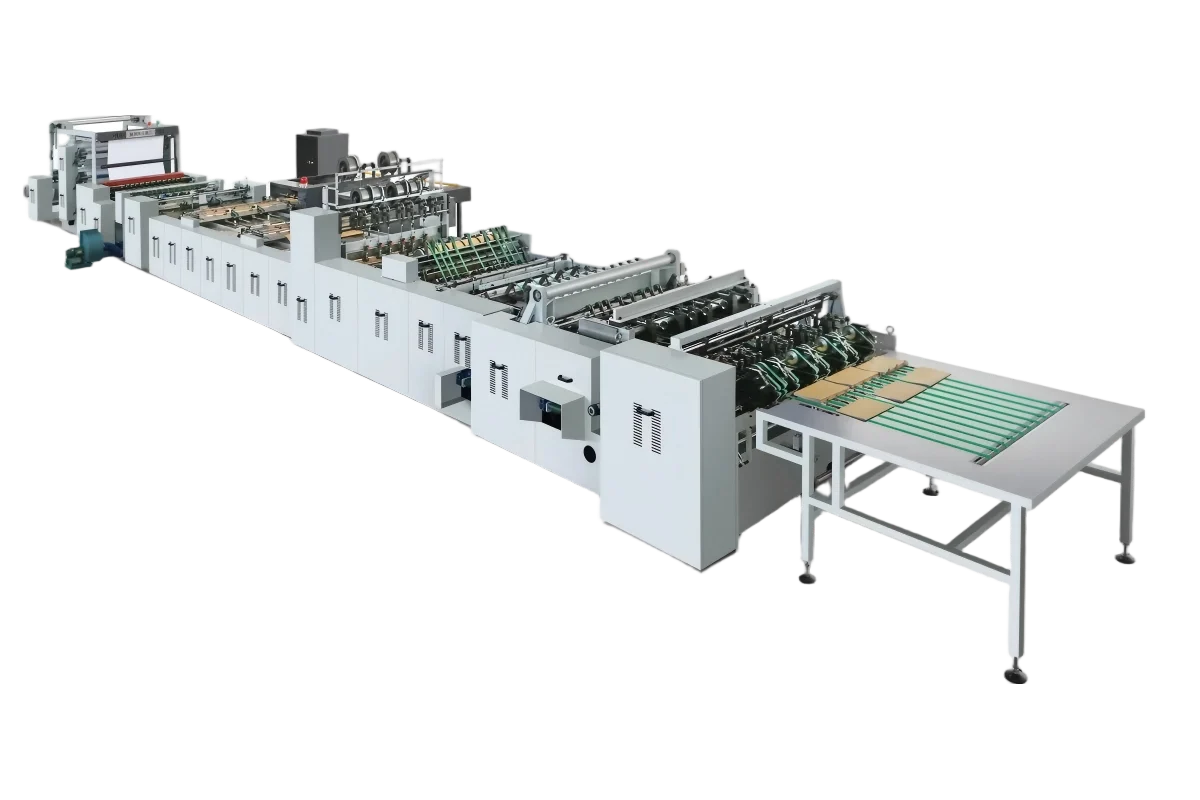
Heli的 HL-1080GD骑马钉笔记本生产线 将卷筒纸柔版印刷与数张、封面喂入、铁丝订、折页、压书脊和 切边结合在一起。其Hohner订书头可形成用于固定练习本的铁丝钉。
2. 锁线和包脊带精加工
本节重点介绍Heli的HL-1080FX生产线上使用的练习本锁线方法。线沿预定折线将 组装好的封面和内页固定。在折叠书叠之前,将脊带贴在外侧 缝线上方。脊带覆盖并保护缝线,使书脊呈现整洁的 外观。在传统的帖装锁线中,多个折叠帖用线连接形成书芯。


对于需要耐用锁线结构和协调书脊外观的作文簿和练习本系列, 锁线加书脊胶带工艺值得考虑。
带书脊胶带锁线工艺的优势
- 经久耐用,适合日常使用。 一排缝线沿折痕将纸页固定在一起, 帮助书本经受住重复翻页。装订强度取决于纸张、线和锁线 设置。
- 整洁且受保护的书脊。 书脊胶带覆盖外露缝线,赋予书本 连续的成品表面。
- 更多设计选择。 对比色的胶带可以衬托图案封面,而 协调的胶带颜色可以使笔记本系列呈现出一致的外观。
锁线设置需与纸张相匹配。在试生产期间,检查缝线是否牢固 固定纸页,以及书脊胶带是否对齐并妥善粘合。
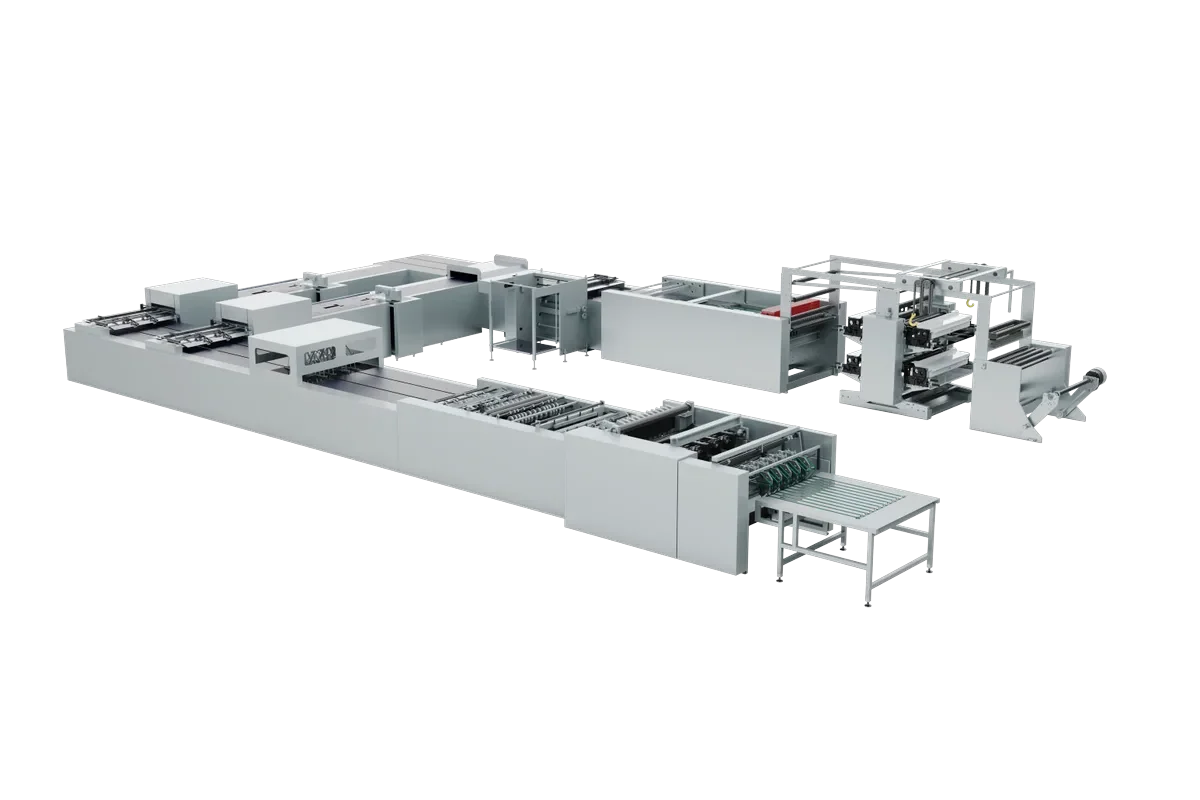
Heli的 HL-1080FX锁线加包书脊胶带笔记本生产线 将卷筒纸柔版印刷与切页、数张、封面喂入、锁线、包书脊胶带、折页 和切边结合在一起。该生产线使用Seiko锁线机。
提供成品书样有助于供应商确认您的 订单所需的锁线和书脊精加工。
3. Saddle Stitching vs Thread Sewing for Your Production Line
Which Binding Method Is Right for Your Production?
Start with your main product specifications, order mix and expected output. For standard school exercise books with a tight cost target, saddle stitching is often a practical starting point. When a customer specifically requires a sewn construction, consider thread sewing. If a coordinated spine finish is also required, consider spine taping as part of the configuration.
Heli’s HL-1080GD is designed for saddle-stitched exercise books. The HL-1080FX combines thread sewing with spine taping. If you produce several types of exercise books, discuss your main orders and a customer-approved sample with the supplier to select the appropriate equipment.
Next, specify the finished book size, inner-page paper weight (gsm) and thickness, cover stock, finished page count and typical order quantity. Papers with the same gsm can differ in thickness and stiffness. State whether the page count includes the cover. Also provide the sheet count per stack and the sheet dimensions before folding. Each leaf in the finished book has two pages, one on each side. These details help the supplier assess the binding capacity, folding arrangement and trimming layout.
Evaluate output across the complete line. Printing, binding and finishing sections have their own operating limits, and the final production rate depends on their combined performance with your materials. Ask for sustained output in finished books per hour for the proposed configuration.
Comparing Saddle Stitching vs Thread Sewing Costs
For a cost comparison, use the same finished size, paper, page count and quality requirements. Calculate the cost per 1,000 books that meet those requirements. Include inner-page paper, covers, printing and binding consumables, labor and an allocated share of energy, maintenance and equipment depreciation. Account for material waste and operating time during both setup and production. Divide the total batch cost by the number of saleable books, then multiply by 1,000. Include the thread, tape and processing costs of the sewn-and-spine-taped option when estimating production costs for your customer’s required finish.
A production trial using representative paper and cover stock helps you compare saddle stitching vs thread sewing for your planned orders. Open the books to the center spread, turn the pages and inspect the spine, staples or thread stitches, spine tape where fitted, and trimmed edges. Record setup time, waste and the number of books that meet your quality requirements. Use these results to assess whether the equipment suits your planned orders.
常见问题解答
Saddle stitching vs thread sewing — what is the main difference?
Saddle stitching secures the sheets with wire staples along the center fold. Thread sewing holds them together with a row of thread stitches. On a sewn-and-spine-taped exercise book, tape covers the outside of the sewn spine to protect the stitching and provide a finished appearance.
Can both methods produce books that open comfortably for writing?
Both constructions can provide a comfortable writing experience. How easily the book opens and how flat the pages lie depend on paper stiffness, book thickness, cover stock and spine finishing. Open and write in a sample made with your planned materials to assess the result.
How many pages can each binding method handle?
Capacity depends on the machine configuration, paper thickness and book construction. Provide the finished page count, sheet count per stack, sheet dimensions before folding and a physical sample. Ask the supplier to confirm that the binding and finishing sections can handle these specifications.
Is thread sewing stronger than saddle stitching?
Thread sewing can provide a durable structure for repeated use. It does not automatically make every sewn book stronger than a saddle-stitched book. Strength depends on the materials, binding setup and workmanship. Compare samples made with your specified paper and page count to assess performance in use.
Can saddle stitching and thread sewing be used on the same production line?
Supporting both methods requires the appropriate wire stitching and thread sewing units, together with compatible feeding and finishing arrangements. Ask the supplier to confirm the supported binding methods and changeover requirements for the proposed line. Heli’s HL-1080GD and HL-1080FX use the respective binding configurations described above.